
Tender comparison is not just ranking prices. It is checking what each price includes.
- Compare the basis first
- Normalise the tenders
- Review commercial risk
- Use clarifications consistently
- Keep a decision record
Compare the basis first
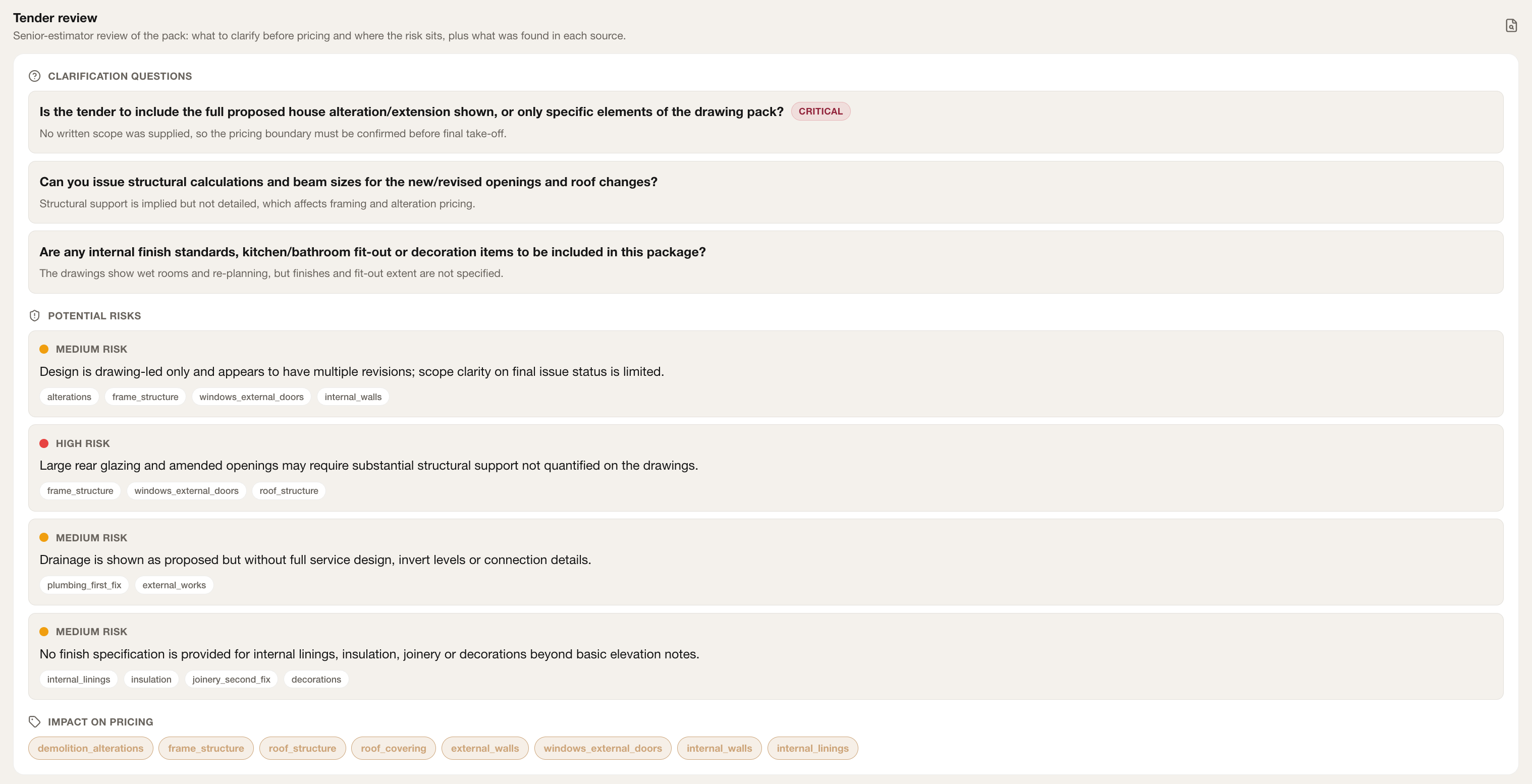
Two tenders can look close on price while being different in scope. Compare assumptions, exclusions and provisional areas before comparing totals.
Normalise the tenders
Group tender lines into comparable packages and flag differences so the decision is not based on a misleading total.
Review commercial risk
The cheapest tender is not always the safest. Clear scope and assumptions may be more valuable than a lower number with hidden uncertainty.
Use clarifications consistently
Send the same clarification question to every relevant tenderer and compare the responses against the same return date. A private assumption made for one tender can distort the whole comparison.
Keep a decision record
Record adjustments, qualifications and the reason for the preferred tender. The record should show the submitted total, the normalised total and any risk that remains with the client or contractor.
Review checklist
- Confirm every tender prices the same revision
- List exclusions and qualifications side by side
- Normalise PC sums and provisional sums
- Record unresolved clarifications before selection
FAQs
What is a tender comparison?
A review of multiple prices against the same scope so differences in inclusions, exclusions, allowances and risk are visible.
Should tenders be compared only by total price?
No. Total price matters, but scope, assumptions and exclusions need to be compared first.
Use this thinking on a real project pack
Send drawings, specifications, notes or a current quote. Quotify will show how the project can be structured for review.