
Margin protection starts before the quote is accepted, while risk is still visible.
- Where margin pressure starts
- Controls before sending
- Use the client report
- Test the sensitive lines
- Set approval thresholds
Where margin pressure starts
Margin pressure usually starts when unknowns become promises or provisional areas are hidden in the total.
Controls before sending
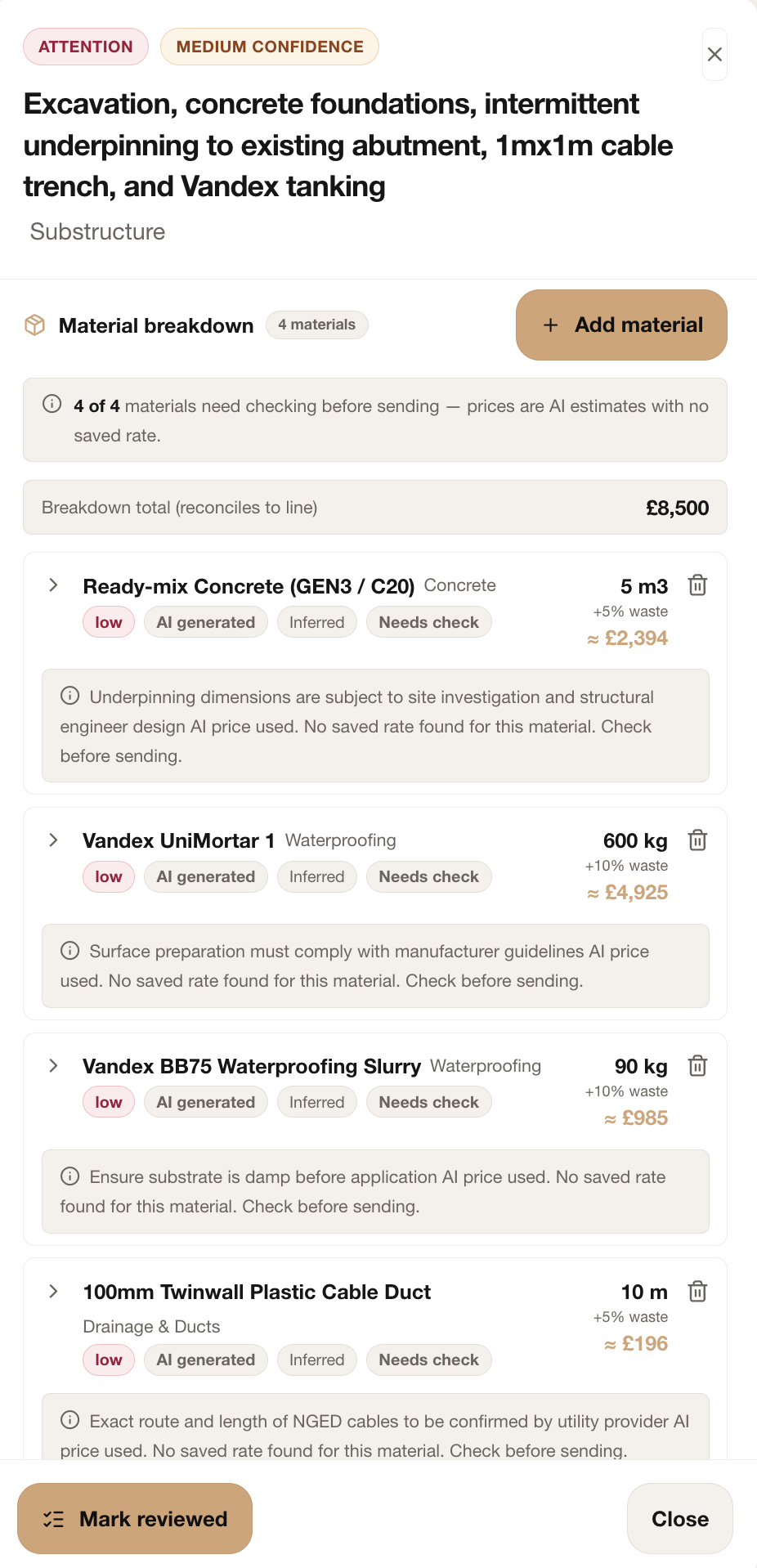
Separate cost categories, tag uncertain items and make assumptions clear before the price goes to the client.
Use the client report
The client report should explain what is included, what depends on later selections and what is excluded from the fixed price.
Test the sensitive lines
Review the packages that can move the result most: labour duration, ground conditions, subcontract gaps, programme assumptions and material lead times. A small percentage movement on a large package can consume the planned margin.
Set approval thresholds
Decide which risks the estimator may accept and which need director, contracts or specialist review. Clear thresholds stop commercial exposure being accepted silently at the end of a rushed estimate.
Review checklist
- Separate margin from contingency
- Review the largest and lowest-confidence packages
- Check quote validity and escalation assumptions
- Approve exceptions before the price is sent
FAQs
How can builders protect margin on fixed-price work?
By making assumptions, exclusions, allowances and scope gaps visible before the fixed price is issued.
Should contingency be shown separately?
Internally it should be visible so the builder understands what risk is being carried.
Use this thinking on a real project pack
Send drawings, specifications, notes or a current quote. Quotify will show how the project can be structured for review.